
CONFERENCE OF EUROPEAN CHURCHES
EVANGELICAL LUTHERAN CHURCH OF FINLAND
1. Origins and goals
The question contained in the conference theme "Are the fields ripe for harvesting?" (John 4:35) points to a dynamic process: seeds are sown, they sprout and grow, until they bear fruit which is harvested. The ecumenical movement among European churches, as it has taken place in the CEC for almost half a century, indicates a process of maturation towards church unity. It is also a movement towards an eschatological goal. The evaluation carried out at this consultation made this dynamic appear more clearly.
The consultation was held in the historic city of Helsinki at a time of world-wide political crisis, which was also a time of intense efforts among the nations of Europe towards their own political, economic and cultural integration. The churches are not left untouched by these external processes. They have a duty to support peaceful and fruitful neighbourliness among peoples, cultures and nations.
The CEC Study Secretary, Professor Viorel Ionita, set forth the origins and goals of the consultation in his opening speech. As part of the preparations for the Ecumenical Assembly in Graz, 1997, the Swiss Federation of Protestant Churches held a consultation in Dulliken (Dulliken I) on "Basic questions of agreement between western Protestantism and eastern Orthodoxy". In November 1997, after its Assembly in Graz, CEC agreed to a priority on evaluation of the dialogues among the European churches. A second consultation was held in 1998 in Dulliken (Dulliken II), on "Cultural factors in the encounter between western Protestantism and eastern Orthodoxy". A third consultation (Dulliken III) was held in November 1999 under the auspices of CEC and the Evangelical Church in Germany, on "Cultural aspects of Orthodox-Protestant conversations and encounters", which made two recommendations:
that the process of reception of dialogues be broadened to include the congregational level;
that the churches study their history together, to find a new approach to their past and discover ways toward reconciliation.
The Helsinki consultation (Dulliken IV) concerned itself with the process of reception of the dialogues between the Orthodox churches and the churches of the Reformation - a process which should not be undertaken only after dialogues are over, but should follow their progress right from the beginning. This is a process only of information, but also of discernment and assessment, which takes place in the interaction between the events of the dialogue and the life of local churches. We also have to ask what effects dialogues have upon one another and whether there may be irreconcilable elements among them, and how the dialogues relate to the statements of church fellowships which have been formed in recent decades in Europe: the concordat of the churches of the Reformation in Europe (Leuenberg Agreement), 1973; the Meissen Common Statement between the EKD and the Church of England, 1988/1991 and the Porvoo Common Statement between the British and Irish Anglican Churches and Nordic and Baltic Lutheran Churches, 1992/1996.
The present tensions in the WCC, following severe criticism of current developments by the Orthodox member churches, can be reduced and overcome by listening carefully to one another and rebuilding trust. The Helsinki consultation contributed to these efforts. The consultation participants are convinced that the reception of dialogues between the Orthodox churches and the churches of the Reformation can strengthen understanding and trust.
2. The participants
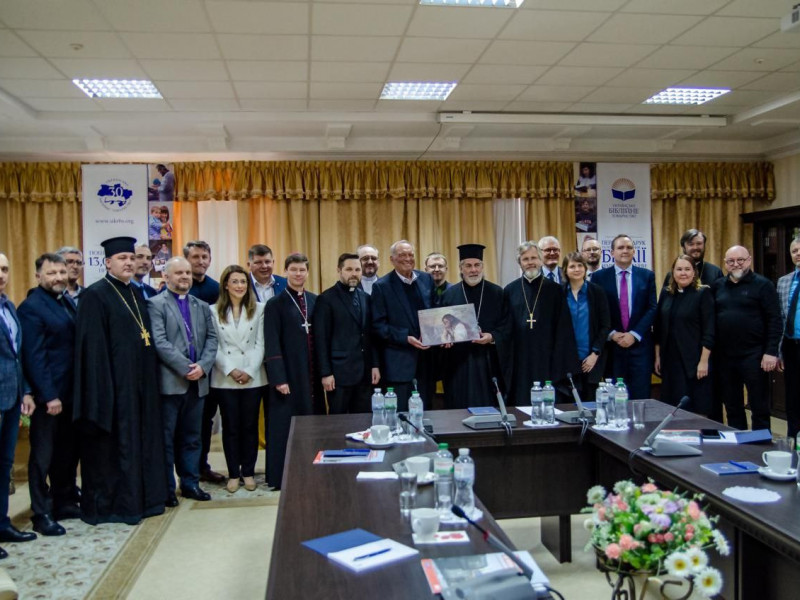
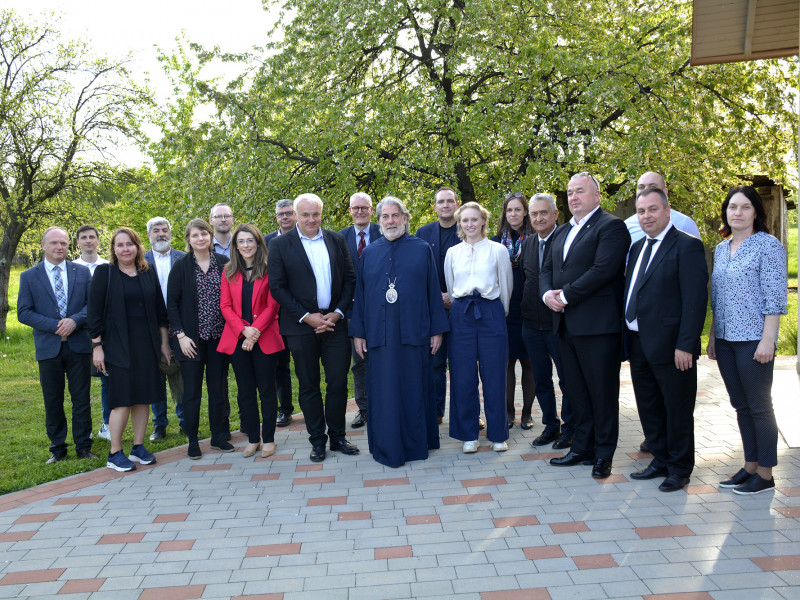
Moderators of the consultation were Bishop Juha Pihkala of the Evangelical Lutheran Church of Finland, and Metropolitan Athanasios of Heliopolis and Theira, representing the Patriarchate of Constantinople. Seven participants came from five Orthodox churches: the Ecumenical Patriarchate and the Russian, Romanian, Czech-Slovakian and Finnish Orthodox Churches. Thirteen Lutherans came from Finland, Germany, Romania and Sweden. There were also representatives of the Church of England and the Waldensian Church of Italy, as well as the WCC's Faith and Order Commission, the Leuenberg Church Fellowship and the Finnish Council of Churches.
On Sunday, 23 September the members of the consultation took part in the prayers of an Orthodox liturgy in Uspensky Cathedral in Helsinki. Morning prayers were held according to the Orthodox and Lutheran traditions by turns. The consultation members also participated, in the evening of 25 September, in public prayers for peace held in Senate Square by the religious communities of Finland.
3. Papers presented
The following lectures were presented:
Prof. Risto Saarinen, University of Helsinki, spoke on "The dynamic of the theological dialogues between the Orthodox churches and the churches of the Reformation, 1995-2000". This paper stressed the positive work done on soteriology (justification and theosis), eucharistic ecclesiology and trinitarian theology, and put aside the Orthodox criticism of the WCC. The danger of a "perpetuum mobile", of always producing new texts which are neither approved by the churches nor presented to their members, should lead us in the direction of more contacts, encounters and shared life, although this is difficult to do in a methodical way.
Prof. Wolfgang Bienert, University of Marburg, Germany, gave a chronological overview of the dialogues between the Evangelical Church in Germany and the Russian Orthodox Church, the Ecumenical Patriarchate, the Romanian Orthodox Church and the Bulgarian Orthodox Church. He stressed, as factors needed for a fruitful dialogue, trust, patience and constancy, as well as readiness to listen and to learn from one another.
Prof. Valer Bel, University of Cluj, Romania, on "The bilateral theological dialogue between the Romanian Orthodox Church and the Evangelical Church in Germany"
Revd. Dr. Colin Davey, Church of England, on "The reception of the Anglican-Orthodox Dialogue in the Church of England"
In the discussion which followed, several participants mentioned the change of generations of participants in the dialogues. Others gave a number of examples of contacts and exchange between churches, including the participation of Lutherans in the Anglican-Orthodox encounters in Romania and a dissertation on dialogues between churches. These papers and the discussions on them provided the impetus for work in two groups:
the dynamics, process of reception and methodology of the different dialogues;
forms of dialogue with the Orthodox churches and their relationship to other dialogues.
4. Results of the discussion
A clear concept of the unity of the church, which is common to all, must be worked out. There is a danger that some are satisfied just to have common actions and cooperation at the practical level. Two points of view must be kept in mind simultaneously: on one hand the search for unity in the faith (Romans 1:8-15), on the other, going ahead with common actions (1 Peter 4:7-11). Even when we do not yet have a common theological basis for full unity of the churches, there is nevertheless a basis for acting together, for example in the social service (diaconia) of the church.
In the churches of the Reformation, an openness has developed towards forms of liturgical expression of the eastern churches (such as icons and musical and liturgical elements). On the other hand, new approaches to the Holy Scriptures may be observed in the preaching and theology of some Orthodox churches. Orthodox spirituality has influenced the liturgy and spirituality of the West, as in the Nicene-Constantinopolitan Creed in its original form; the trinitarian view of intercessory prayer and the use of the epiklesis in eucharistic prayer; and the borrowing of intercessory prayers and other prayers and chants, and the spiritual teaching on the practice of prayer, from the eastern monastic tradition.
The dialogues show that the Holy Scriptures are the treasure we have in common. Within them we have different ecclesiological emphases. In the interpretations of the church fathers we have discovered our common heritage. Christians in the West have found a new approach to Orthodox liturgy as proclamation of the Scriptures in singing and praise.
Churches must ask themselves whether they can give up something for the sake of church unity. What some see as sacrifice or disparagement of their requirements, others find to be a new way of seeing a classical topic, for example the issue of churches remaining within the apostolic succession. However, every church must take care that changes in interpretation do not lead to a loss of theological substance or loss of church identity. In ecumenical dialogue, one's own confessional identity must be preserved within each of several dialogues, and one's dialogue partner must also have a clear ecclesiological identity. Only in this way will dialogues prove to be mutually enriching. For example, the Orthodox cannot declare their recognition of Holy Baptism in isolation from issues of ecclesiology and ministry. The churches of the Reformation base their eucharistic hospitality on theological arguments, whereas for the Orthodox churches this is only possible on condition of unity in belief.
The question to be asked is not only what we have learned from one another in dialogue, but also what the partners in the dialogues have learned from other dialogues. Some churches are motivated to take part in dialogue not in order to learn from one another, but rather to witness to their own faith. In general, both the Orthodox and Reformation churches see dialogue as a mutually enriching process. The dialogues can further enrich one another when local dialogues are placed in relationship with those going on at the world-wide level. The conclusions reached in international dialogue have only the authority of dialogue commissions behind them as long as the results are not received by the participating churches. For example, the Eastern Orthodox have concluded the first stage of dialogues with the Old Catholics and the Oriental Orthodox, which resulted in important agreements, but these have not led to significant changes in relations between these churches. Full reception includes putting into practice the conclusions of dialogues.
Many of the tensions which exist among churches are due not only to theological differences but also to developments in post-modern society and the globalized world. However, theological clarification of controversial issues should not be avoided. These clarifications can then serve as the basis for stronger joint actions by the churches in the society.
Recommendations
We make the following recommendations as a group of delegates from Orthodox and other member churches of CEC, who have been involved with one another in bilateral dialogues. The goal of these recommendations is that the churches in Europe may learn to speak with one voice in response to the challenges of secularised society. The churches should take steps now towards a common witness to our faith vis-à-vis our society.
Recommendations for the work of theology and pastoral ministry (1-12)
Efforts should be made to link the dialogues together in a network. Their conclusions should be so formulated that they complement one another. This will make plain that there is one process within the one ecumenical movement.
The dialogue documents and conclusions must also be written in language which lay church members can understand.
Theological training should include more study of confessions and of the actual texts of dialogue conclusions.
Exchanges between both faculty and students should be promoted more strongly. Grant programmes, research and dissertation projects on dialogue issues should receive more support.
The confession of faith of 381 (Nicene-Constantinopolitan) should be used in worship in the participating churches. Discussion must be continued on the tradition of this creed in the West.
The question of mutual recognition of Holy Baptism should continue to be dealt with and discussed by the Orthodox churches and the churches of the Reformation.
Common translations of the Holy Scriptures, or passages to be used in worship, should be undertaken in the languages in which they do not yet exist.
The following are suggested topics for future dialogues: prayer and spirituality, teachings about the sacraments, ecclesiology, ethical and socio-ethical issues.
Shared prayer services should continue to be promoted.
Joint activity in the areas of pastoral care, social service, congregational encounters, youth work etc. should be further developed.
The issue of marriages between persons of different confessions should be discussed and recommendations made for worship and pastoral guidance.
The different positions of the churches on eucharistic hospitality should be made clear to lay church members.
The participants in this consultation support the goals of the Charta Oecumenica. The connection between these goals and work on dialogues must remain visible.
Helsinki, 26 September 2001
(signed)
| Bishop Juha Pihkala | Metropolitan Dr. Athanasios of Heliopolis and Theira |