

CEC - logo


To Frontpage

Printable edition
Click to print

A Word from Herrenalb
on the occasion of the Conference of European Churches Consultation
13-17 March 2000, Haus der Kirche, Bad Herrenalb, Germany

"Giving an Account of the Hope - the Common Calling of the European Churches to Mission"

"...Lydia...was listening...The Lord opened her heart..." (Acts 16.14)

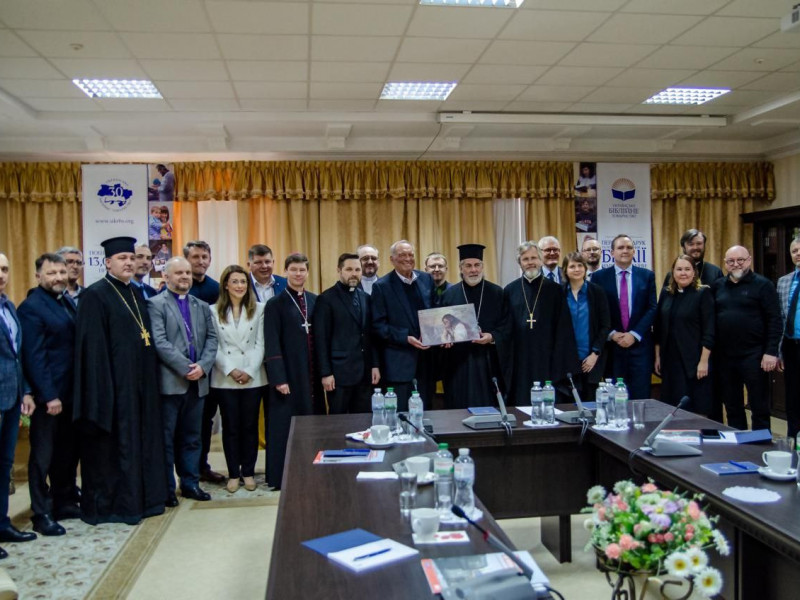
We were together in Bad Herrenalb as Christians from 26 countries and over 20 churches and ecumenical organisations [World Council of Churches (WCC), Lutheran World Federation (LWF), World Alliance of Reformed Churches (WARC), Council of European Bishops' Conferences (CCEE)] from Europe and other parts of the world, to think together about the theme "Giving an Account of the Hope - the Common Calling of the European Churches to Mission". We took as a model the Bible story of Lydia in Acts 16, who was listening to the words of the Gospel when God opened her heart.

Not only did we come from different countries and churches - we also had different emphases in our understanding of mission. But common to us all was the view that we are called, in our pluralistic society, to witness to the crucified and risen Christ.

With the help of Bible studies, papers and reports on missionary work we shared our opinions, learned from and were inspired by one another.

We learned that fruitful mission work requires a clear vision. According to the Biblical witness, this vision arises from the power of the Holy Spirit (Acts 1.8). To put this vision in concrete terms, we have to demonstrate the possibilities for action and start processes moving. We had deep discussions and exchanges with one another about this, and developed some concrete proposals.

Together we formulated recommendations to persons at three different levels. It is our conviction that those at all three of these levels are part of our common mission.

I. To Christians in Europe:

God calls each and every individual Christian to take part in mission in this world. Mission is not just the business of theologians, pastors, priests and missionaries.

The concept of mission can have many different emphases, even though it is always about proclaiming the liberating message of the Gospel. In this sense mission is to be seen as an invitation to each person to live by the "hope that is in you" (1 Pet 3.15f), to give an account of it to all persons and at any time, and thus to be an active part of the Body of Christ (1 Cor 12.12).

II. To the churches in Europe:

The churches should show that they take seriously their faithfulness to a common witness and common participation in the missio dei.

We therefore call upon the churches in Europe to make mission a higher priority in their work - in cooperation with national mission councils, mission agencies and missionary societies.

This also means that they should move forward towards a common mission. Every church already has some institutions, initiatives and resources which will be helpful in doing this. These must be made generally known and accessible through a network.

Every form of missionary work at local level should have an ecumenical character; this means that the churches should try to work ecumenically together and make their missionary activities subject to ecumenical discipline. It is also important to make the missionary dimension a part of theological training, and to develop an joint missionary programme among the various confessional faculties and institutions.


Effective mission is always done in relation to a context. That means that missionary work should take seriously the cultural, political and economic situation in Europe today as its context.

Mutual respect and mutual esteem among churches and religious communities is also part of mission.

III. To CEC:

We are thankful for the role of CEC as bridge-builder and platform for coordination and sharing of missionary work among the churches in Europe. In the awareness that under present conditions CEC's possibilities are limited, we would like to make the following suggestions for its further work:

1. In the area of mission, CEC should promote cooperation with other ecumenical partners (WCC, LWF, WARC, CCEE, mission councils and national councils of churches). In this connection we challenge CEC together with its ecumenical partners to re-think the structure for coordinating ecumenical work in Europe, and to improve it where necessary. CEC should make itself available to its partners as an internal and external instrument for coordinating this work.

2. CEC should develop a programme of ecumenical mission work in which both majority and minority churches are involved, and which is strongly oriented towards the younger generation. This programme should make room for development of models of common mission, for reconciling disagreements in mission and opposing proselytism.

3. CEC should help its member churches to confront the issues of their societal context from a missionary viewpoint, for example the issue of globalisation.

4. CEC should support model projects in local contexts, for example development of a programme for training and further education in ecumenically responsible mission, and organisation of local and regional mission initiatives.

We call on CEC's member churches and other partners to support CEC financially, structurally and through making personnel available in carrying out these recommendations. "Where the Spirit of the Lord is, there is freedom" (2 Cor 3.17). Mission means proclaiming the Gospel of freedom. All Christians and churches in Europe are called upon to take part in it.

Christ is our hope.

Bad Herrenalb
16 March 2000