
Click to print |
Conference of European Churches and Consultation on Hanover, Germany, 22-25 November 1999
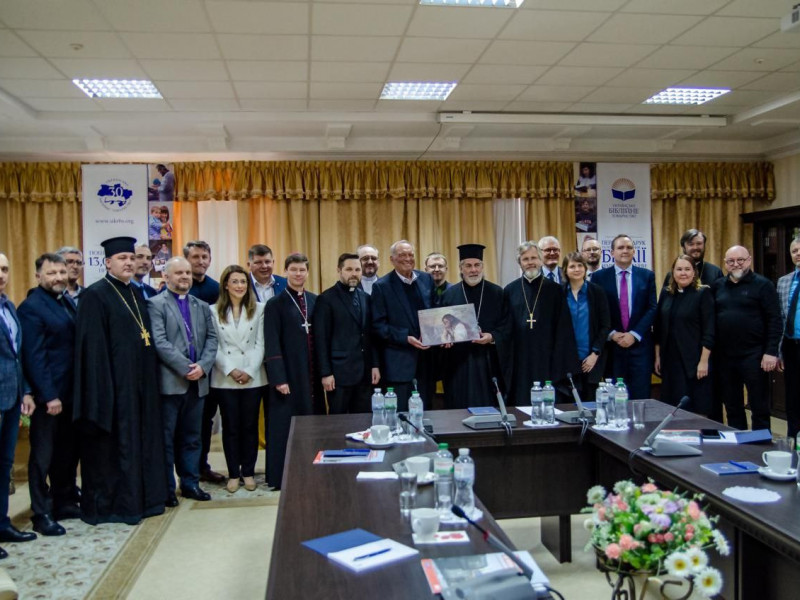
At the suggestion of and in cooperation with the Conference of European Churches (CEC), the Evangelical Church in Germany (EKD) held a consultation, from 22 to 25 November 1999 in Hanover, Germany, on the theme of "Cultural Aspects of Orthodox-Protestant Conversations and Encounters". Moderators of the consultation were Bishop Dr. Rolf Koppe, EKD Director of Ecumenical and Foreign Relations, and Metropolitan Athanasios of Helioupolis and Theira, of the Orthodox Ecumenical Patriarchate. Working with them were twenty participants from various Orthodox and Protestant churches, and from ecumenical institutions, who are involved at various levels in Orthodox-Protestant dialogues and meetings. This consultation was a continuation of two conferences on "Basic Issues in Communication between Western Protestantism and Eastern Orthodoxy", which had been held in Dulliken, Switzerland, 7-9 February 1997 and 13-15 February 1998, sponsored by the Federation of Swiss Protestant Churches and the Institute "Faith in the 2nd World". At these conferences, non-theological factors in the relations between these two Christian traditions were discussed. Ecumenical relations between the Orthodox and Protestant churches have become more complicated and full of tension in the two and a half years since the discussions began in Dulliken. On both sides there are increasing signs of marked differentiation of their positions. We have noticed, to our regret, that some political statements express doubts about the unification of Europe because of its diversity of confessions and cultures. In opposition to this view, our churches uphold the unity in diversity of cultures and confessions in Europe. Our discussions were based on three papers:
These papers examined the consultation theme from exegetical and ethno-psychological viewpoints and from that of church practice. They were then amplified and developed through contributions, comments and sharing of experiences. In the discussions which followed, it became clear that the forms and levels of dialogue and encounter which we already have are characteristically those of getting to know one another, ecumenical cooperation and theological study of the unity of the church. Ecumenical dialogue becomes especially important, at a practical level in any case, in areas where Christians of the Orthodox, Protestant and ancient Oriental churches live as ecumenical neighbours and/or partners. The relation between "Gospel and culture" was studied in the light of the historical experience of the ancient church. As the Gospel is proclaimed in different languages and cultures, the Christian faith takes shape differently in each one. Faith is very much influenced by its cultural context. It is not easy to see the two as distinct from one another. When faith experiences and theological reflections are translated into another language, special attention must be paid to the peculiarities and cultural differences of the language (etymologies and connotations of words, etc.). In our churches we need to continue working with the great diversity of faith experiences and theological reflections, with the various cultural influences upon them, so that they do not cause us to be fearful or closed off from one another, but instead are experienced as enriching, in a way that does service to the cause of unity. Cultural aspects of faith open up new areas for ecumenical dialogue and encounter: here we can mention the Orthodox traditional theology and painting of icons, which are finding their way into Protestant church life, or the spiritual message of Protestant church music, which is receiving increasing attention from Orthodox Christians. In the same way, literature and the art of the film are fields which are effective, in the society, in communicating a positive experience of faith. Practical steps which have already been taken, and should be carried further and augmented by new opportunities, are:
We encourage our churches to take further steps to strengthen ecumenical theological training and
further education in their own areas. We have realised that many of the conclusions from previous theological dialogues between our churches, as well as experiences gained in encounters, have not been made well enough known. Some of these conclusions have not even been translated and published in the languages of all the participating churches. We recommend to our churches to give their support to the reception of these dialogue conclusions, commissioning the tasks that need to be done. This process of reception should extend all the way to the parish level, including such areas as women's and youth work, adult education and the like. With regard to the consultation on "Europe After Kosovo", held in Oslo (14-16 November 1999) by CEC and the Norwegian government, and the conference on Serbia which the EKD held in Loccum (1-3 October 1999) on the initiative of the Serbian Orthodox Church Central European Diocese, the challenge to the European churches posed by reconciliation in southeastern Europe was discussed. We were especially struck by the moving account of the situation of the churches today in the former Yugoslavia given by Professor Pribislav Simic of the Serbian Orthodox Church. The dramatic situation of the people there concerns all Christians and churches in Europe. We encourage CEC to do what it can to see that the recommendations from Oslo are carried out, and we call upon all European churches to commit themselves more firmly to reconciliation and rebuilding in this region. In this connection it has become clear what an important role is played by history in the memories and the mentalities of people today, influencing their actions. Groups of people, and even churches, interpret their common history in different and sometimes opposing ways. This stands in the way of reconciliation among the people and churches in question. Here we were reminded of the experiences in healing of memories in Northern Ireland. We recommend to our churches to work together towards coming to terms with their history, thus gaining a new approach to the past so that they can find ways toward reconciliation. The issue of the relation of church and nation was also discussed at this consultation. We realised again that in different churches the concept of nation has a completely different content, culturally, historically and even theologically; that the churches in Europe have different attitudes towards their own nation, and that some of these include nationalistic tendencies. We recommend to our churches to exchange views with one another on these matters, so that potentials for future conflict can be dealt with before they become dangerous. At this consultation we became aware once again of how important dialogue and encounters among our churches are, because of problem areas which have existed and continue to exist. We were encouraged to commit ourselves to more profound dialogue and more intense encounters among the churches of Europe.
We ask and encourage our churches to continue working together in CEC and other ecumenical
organisations. Hanover, 25 November 1999 In the name of the participants in the consultation
Bishop Rolf Koppe |